
Category: Blog

  • The Enginerd

    The Enginerd

    The Enginerd. He is the unfortunate result of unofficially adventurous tedium’s of engineering combined with the additionally tiresome cross-referencing of restrictions placed by countless numbers of officials and experts tying hands at every turn to collate into a vortex of nerdism equating to high level thought processes combined with exceedingly dull, monotonous, diminutive, inter-personal skills and outrageous conceptualizations. His mission is to solve the physical problems of societal infrastructure to not only maintain, but improve the quality of life for both the private and public sectors. It’s just that simple…or is it?

    We join one such Enginerd tasked with reconfiguring a new private sector system to comply with the public sector rules, regulations and guidelines for sustainable green power generation in a local area. This unprecedented project yields the ability to utilize energy from the local infrastructure instead of just discarding the energy it stores as a byproduct through conventional means in order to reduce excesses that would create problems for the end users. And though some scorn the thought of attempting such ventures citing the laws of physics as not allowing the project to be fruitful, those involved understand the entire system and why such a project could revolutionize sustainable power with low environmental impact for many areas of the modern world.

    Though the concept is relatively simplistic, the application of such a venture is anything but simple. Sophisticated and specialized equipment is necessary to perform this power generation. The Enginerd must review the necessary processing equipment to be used then determine the additional components required so that it is not only functional but tolerable to local, state and national jurisdictions. Add to the complications, the virtually non-existent available real-estate in the only location permissible for installation of the project, and the Enginerd has been placed face to face against an unwavering bureaucracy of foes.

    A technical solution to compact and minimize impact is not enough for this project. The Enginerd must argue the interpretation of laws, codes and regulations with the same entities wanting the project to succeed because of aesthetics! How will this ever result in a successful project? Fear not, a solution is at hand.

    Upon hours of reflection and turmoil in devising a course of action to appease the lords and ladies of public office presiding over final acceptance adherent to their criteria, an acceptable solution emerges from the shadows of the mind. Eureka! With the majority of the equipment located underground, the remaining equipment can be hidden from direct site through the use of expensively extravagant art.

    The plan is set in motion. All parties involved agree satisfaction has been achieved. The project is a success! “We have done it!” the Enginerd exclaims. But within seconds of this outcry of relief, an email appears in the Enginerd’s inbox with the subject line: Electrical Inspector Comments. Upon examination of the email the Enginerd drops his head in reflectance of defeat, then slowly raises it all the way back as he inhales deeply, then screams, “Curse you NEC!!!”

    Author: Sam Russum, P.E., LEED AP
    Mr. Russum is an Electrical Engineer and has been in the engineering field since 2006.  He has practical experience in lighting, power and control design for various industrial, municipal and commercial projects.  His experience includes power distribution, lighting, emergency power, SCADA, and telemetry systems as well as PLC and HMI programming. 
  • Humans ≠ Numbers

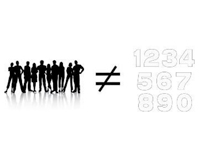
    Humans ≠ Numbers

    Imagine a workspace of twelve-by-twelve cubicle after twelve-by-twelve cubicle filling the entire floor space. Common thought would consider this a boring place, not because of its lack of interesting features, but because of its sameness. Its sameness with all other offices in the world. The current method of herding and stabling the worker: accepted by all; liked by few. The lunchroom is a small, brief respite in the vanilla plain world, where the difference allows an openness otherwise neither considered nor accepted. “Can you believe that John is a department manager?” Asks one. “Yeah, if people were numbers on a spreadsheet or in an equation he might actually be good at it.” Another replies.

    This is John’s domain; here he is king. A place where the laws of physics are supreme, where Bernoulli, Watt, Mohr, and others defined reality hundreds of years ago. He had proven himself an excellent engineer and been rewarded with his own serfdom. He would conquer this like he had engineering, merely by applying the rules and obtaining the desired outcome. This was not a difficult assignment, others had succeeded, and those who failed had clearly not properly applied the laws. As for workers who do not fit in, they are merely rounding errors. Ignore them, give them the undesirable project and soon enough they will leave.

    In spite of the externalities most people are content, if not happy here. The engineering is interesting; the co-workers enjoyable. In general this place is as good as any to spend the required time among the employed. That is if you are not considered a rounding error. For those who choose to rebel against the sameness of this kingdom life is quite miserable. Yet the true problem lies not in those who rebel continuously but in the fact that human thoughts and behavior do not always obey the laws of physics that John would have rule this place. So everyone at one time or another (because independent thought and emotions cannot be quelled) at least visits the realm of the rebel.

    When people cannot control that which makes them more than calculable figures, a confrontation with John will occur. Since no one has complete control of their humanness, emotions or thoughts, confrontation with John is inevitable. People either conform or leave; things continue to be the same. John, through lack of any introspection or lasting opposition, gains more power which reinforces his belief that people are numbers and he is as good at managing people as he is at engineering. The average worker remains relatively happy in spite of him.

    This all too familiar narrative describes most engineer/managers to some extent. We must remember that people do not, in fact cannot, fit into equations. Just because ‘C’ looks like ‘A’ and ‘B’, they are not necessarily all the same. To use a concept that is criticized as fad by some and completely adopted by many in the management and leadership community the engineer/manager must know and improve their Emotional Intelligence. A good place to start would be using this psychtest evaluation tool. It will likely be eye opening and provide some feedback to fuel positive introspection on how you relate to employees, co-workers, clients, vendors, sub-consultants, and even family.

    About the author: Ed Carlisle is a Vice President and Senior Mechanical Engineer at R&W, he is a Registered Professional Engineer in 5 states. He holds a Bachelor of Science Degree in Management and is currently studying for a Master of Arts degree in Strategic Leadership.
  • Financial Incentives for Green Construction

    Financial Incentives for Green Construction

    In the recent movie ‘Lincoln’ by Steven Spielberg, Abraham Lincoln is faced with a difficult choice that will affect millions of lives, current and future. The Civil War is in its fourth year, Lincoln has just been reelected to a second term and the Confederate states have come to him with an offer of surrender. The catch is that they are asking him to repeal the 13th amendment which outlaws slavery. The path of least resistance, based on many of the voices, would be to end the war immediately by repealing the amendment and allowing slavery to continue. As we know from history, Lincoln, made the hard choice to keep the amendment, thereby prolonging the war. He stood firm for what he believed was right.

    While the moral choices are not as stark in engineering, we are frequently faced with a choice to take the path of least resistance by designing or installing the least expensive, least efficient building systems available. In most situations it is found that by spending a little more up front for a more efficient installation, building owners will save money in the long run. Fortunately there are many energy incentives that will make this choice easier.

    The energy incentives fall into three categories: rebates/grants, tax credits, and tax deductions. These incentives are frequently enough to allow the owner to ‘pull the trigger’ on a more efficient project than they otherwise may have done.

    • Rebates and grants are money that is given directly to the owner before (grants) or after (rebates) the project has been completed. ARRA, Oregon Department of Energy’s (ODOE’s) SB1149 program, Energy Trust of Oregon (ETO), BPA, Clark PUD, EWEB and many other local utilities will pay a certain percentage of the total project cost based on the annual calculated energy savings. These incentives typically pay for 10%-50% of the entire project.
    • Tax credits are reductions in the tax owed by the owner based on the annual energy saved. In Oregon, under the EIP (formerly BETC) these tax credits will pay for 35% of a qualifying project. Owners with no tax liability are able to auction off their tax credits to the highest bidder.
    • Finally, the federal government offers a tax deduction for qualifying projects. This deduction through the IRS reduces taxable income by $0.30-$1.80 per square foot of the affected building.

    One example is a recent project R&W completed for the Oregon Trail School District. As part of ODOE’s SB1149 school efficiency program, R&W conducted energy audits on all 10 schools in the district. From these studies, the district was able to identify and quantify multiple energy upgrade projects at each school, including replacing inefficient boilers, delamping over lit areas, upgrading lighting controls, replacing single pane windows and upgrading old pneumatic HVAC control systems to modern digital controls. As a result of these studies, ODOE in partnership with ETO was able to provide the district substantial incentives to help complete these improvements. These energy upgrades will result in lower utility bills, lower operation and maintenance costs and more comfortable classroom environments.

    While we don’t face moral choices as encompassing as Abraham Lincoln, we are all faced with many small choices every day. Will we take the path of least resistance or will we implement energy efficient practices to reap benefits in the future? Thankfully, the incentives available make the choices easier for us. The benefits reaped will affect generations for years to come.

    Author: Mark D. Jones, LEED® AP
    Mr. Jones is very proficient at HVAC, piping and plumbing design, energy audits, life cycle cost analysis, LEED energy modeling and commissioning, as well as knowledgeable in the various mechanical, plumbing and energy codes.  He has worked on various projects with utilities and state agencies, including Energy Trust of Oregon, Clark Public Utilities, Bonneville Power Administration and Oregon Department of Energy to improve energy efficiency for clients while helping in securing rebates and incentives. He has taken the lead in developing and promoting R&W’s energy efficiency and commissioning services.